
How Al-Shabaab shapes climate adaptation in Somalia
Somalia's climate finance goes almost entirely through the state, so it largely stops where government control ends. Many of the country's most climate-vulnerable communities live beyond that line, under or alongside Al-Shabaab. Drawing on 42 interviews and an archive of around 50,000 Al-Shabaab media outputs, this report examines how the group regulates trees, grazing, water and the sea, and how it responds to droughts and floods. Some of its rules protect resources. Most serve its security, revenue and control, and many close off the coping strategies households rely on when a shock hits. The report sets out four distinct operating environments, from government-held towns to areas under full Al-Shabaab control, and what adaptation programming is realistic in each.

Environmental frontlines
Environmental violence in Mexico is escalating, claiming the lives of dozens of land defenders each year — yet the crisis remains dangerously underreported. To understand the roots of this hidden war, we spoke with award-winning journalist, author, and Centre on Armed Groups Fellow, Dr. Anjan Sundaram, whose frontline reporting has spanned war zones from Central Africa to Latin America. Anjan unpacks the nexus between environmental conflict, organised crime, and international business interests — and explains why indigenous communities are increasingly taking up arms to protect ecosystems vital to our planet’s future.
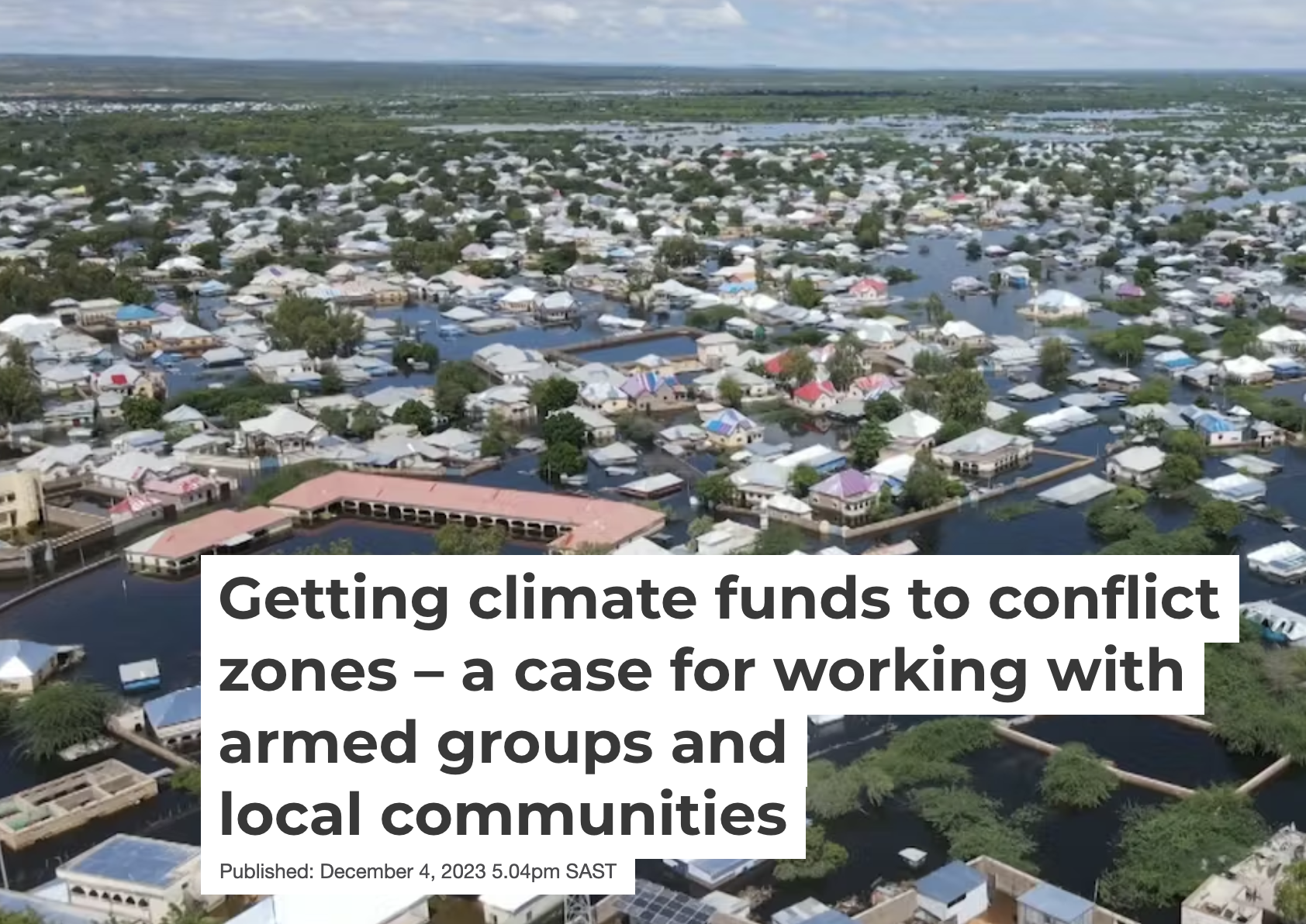
Transferring climate funds to conflict zones
Conflict-ridden and fragile countries are among the most vulnerable to climate change and least prepared to deal with it. They are largely excluded from climate adaptation programmes and funding. This article charts a path forward on how to address climate adaptation in conflict zones.

Resist, negotiate, submit? Civilian agency and jihadism in Central Mali
This paper examines life under jihadist groups like JNIM in Mali, looking at the different survival strategies civilians employ.

Climate adaptation in no-man's land: bridging the conflict-climate gap
This paper examines climate change and armed groups, specifically the failure the address climate adaptation in areas beyond state control.