Asia
This research report explores the perceptions, motives, and practices of non-state armed groups and de facto authorities regarding children’s access to essential services across four case-studies: Mali, Myanmar, the Occupied Palestinian Territory and Yemen.
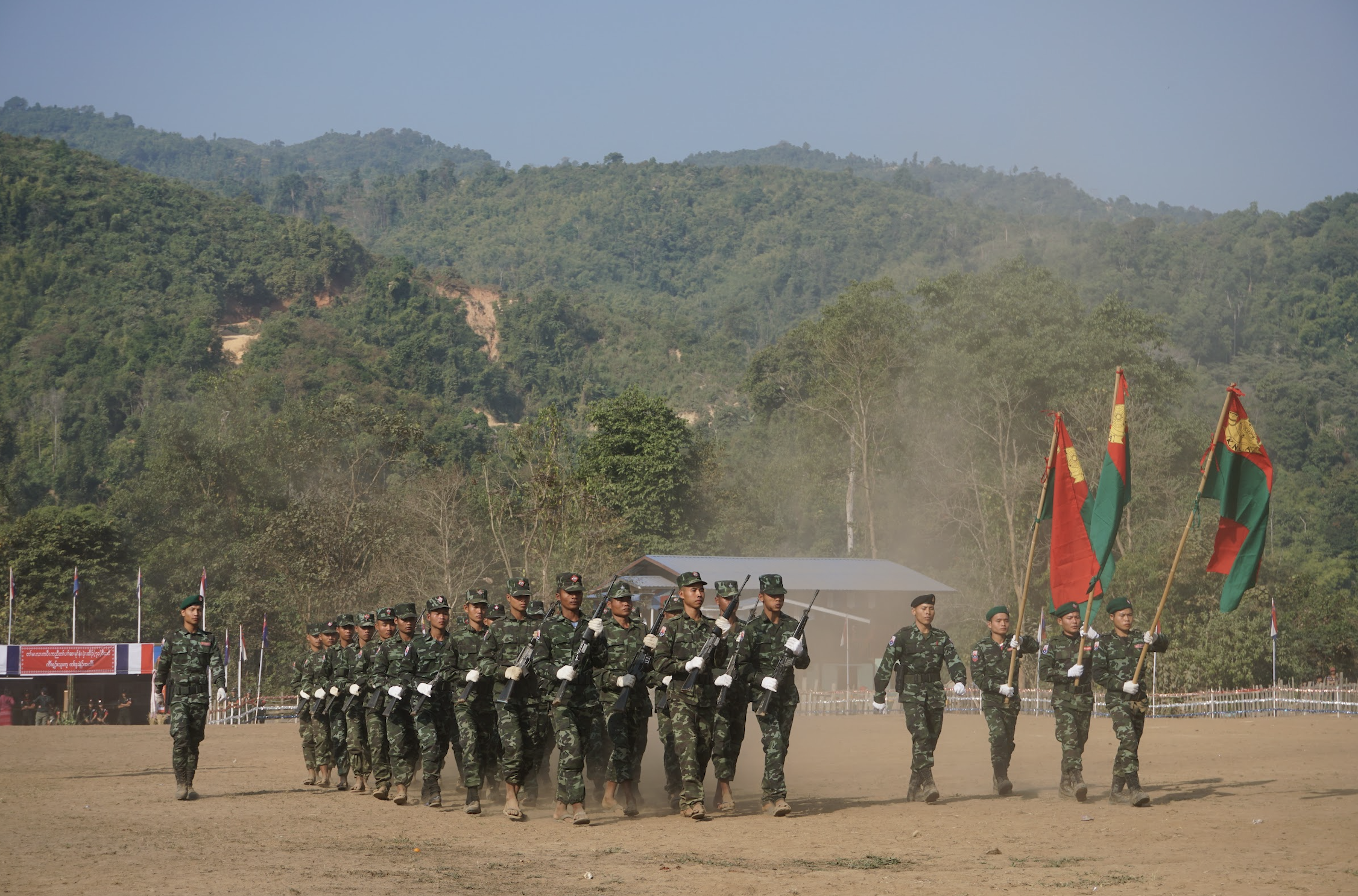
This briefing note shows Myanmar’s conflict entering a critical phase, where resistance forces face growing pressure but continue to adapt, even as the war becomes a prolonged and uncertain contest of endurance.

From Myanmar to Somalia, armed groups are shaping markets, setting economic rules, and pursuing international economic relations. This report challenges the narrow focus on illicit finance, showing how armed groups around the world regulate trade, allocate resources, and govern everyday economic life—sometimes more effectively than the state. Combining insights into four case studies and a comparative analytical framework, the report offers a new lens for understanding how non-state actors structure economies during conflict. For development economists, peacebuilders, and humanitarians, understanding these systems is essential. Effective aid, realistic economic policy, and meaningful engagement with conflict-affected areas all require a grounded view of how armed groups govern economies in practice.

This report explores how Myanmar’s armed resistance has evolved since the 2021 coup, focusing on eight People’s Defence Forces (PDFs) across the country. These include Autonomous Battalions like the Mandalay PDF and Bamar People’s Liberation Army—powerful, Bamar-led groups that work independently but maintain key alliances. It also examines Integrated Battalions, deeply tied to ethnic armed groups, like the Karenni Nationalities Defence Force (KNDF). In addition, the report covers mid-capacity Allied Battalions like CDF–Mindat, ABSDF, SAF, and PLA, which operate alongside ethnic forces while keeping some autonomy. Finally, it looks at Localised Battalions that may shift closer to allied status if support increases, such as the Southern Shan PDF. This report explores how Myanmar’s armed resistance has evolved since the 2021 coup, focusing on eight People’s Defence Forces (PDFs) across the country. The analysis includes Autonomous Battalions like the Mandalay PDF and Bamar People’s Liberation Army—powerful, Bamar-led groups that work independently but maintain key alliances. It also examines Integrated Battalions, deeply tied to ethnic armed groups, like the Karenni Nationalities Defence Force (KNDF). In addition, the report covers mid-capacity Allied Battalions like CDF–Mindat, ABSDF, SAF, and PLA, which operate alongside ethnic forces while keeping some autonomy. Finally, it looks at Localised Battalions that may shift closer to allied status if support increases, such as the Southern Shan PDF. Together, these case studies offer critical insight into the structure and fragmentation of Myanmar’s resistance—underscoring the need for context-specific engagement strategies rather than one-size-fits-all approaches.

This briefing note shows that the widespread use of drones in Myanmar illustrates a technical and tactical shift for both the military (SAC) and resistance movements, reshaping how each side engages on the battlefield and responds to evolving capabilities. While resistance groups initially had a head start, they are now falling behind on the innovation curve and increasingly depend on low-cost adaptation to overcome resource constraints. The SAC, by contrast, has gained the upper hand through a newly acquired high-tech drone fleet drawing on Russian and Chinese technology. The decentralised and resource-limited nature of resistance drone warfare has spurred tactical innovation but also fragmented command structures, complicating efforts to scale coordinated operations. In addition, the report explores how the rise of drone warfare has opened up new roles for youth and women within resistance movements.

The war in Gaza has had deep implications for power dynamics in the Middle East. Iran’s regional power has been particularly impacted with an altering of the so-called ‘Axis of Resistance’, its network of allies across the region—including in Palestine, Lebanon, Iraq, Syria, and Yemen. This has had a considerable impact on Iran’s military capabilities in the current confrontation with Israel. To shed light on these developments, and what they mean for Iran and the balance of power in the region, we spoke with Centre on Armed Groups Fellow, Dr Fatima Moussaoui, a Middle East expert and lecturer at Sciences Po Paris, who explores these dynamics in her recent book, Iran’s Military Power Projection and the Empowerment of Ansar Allah.
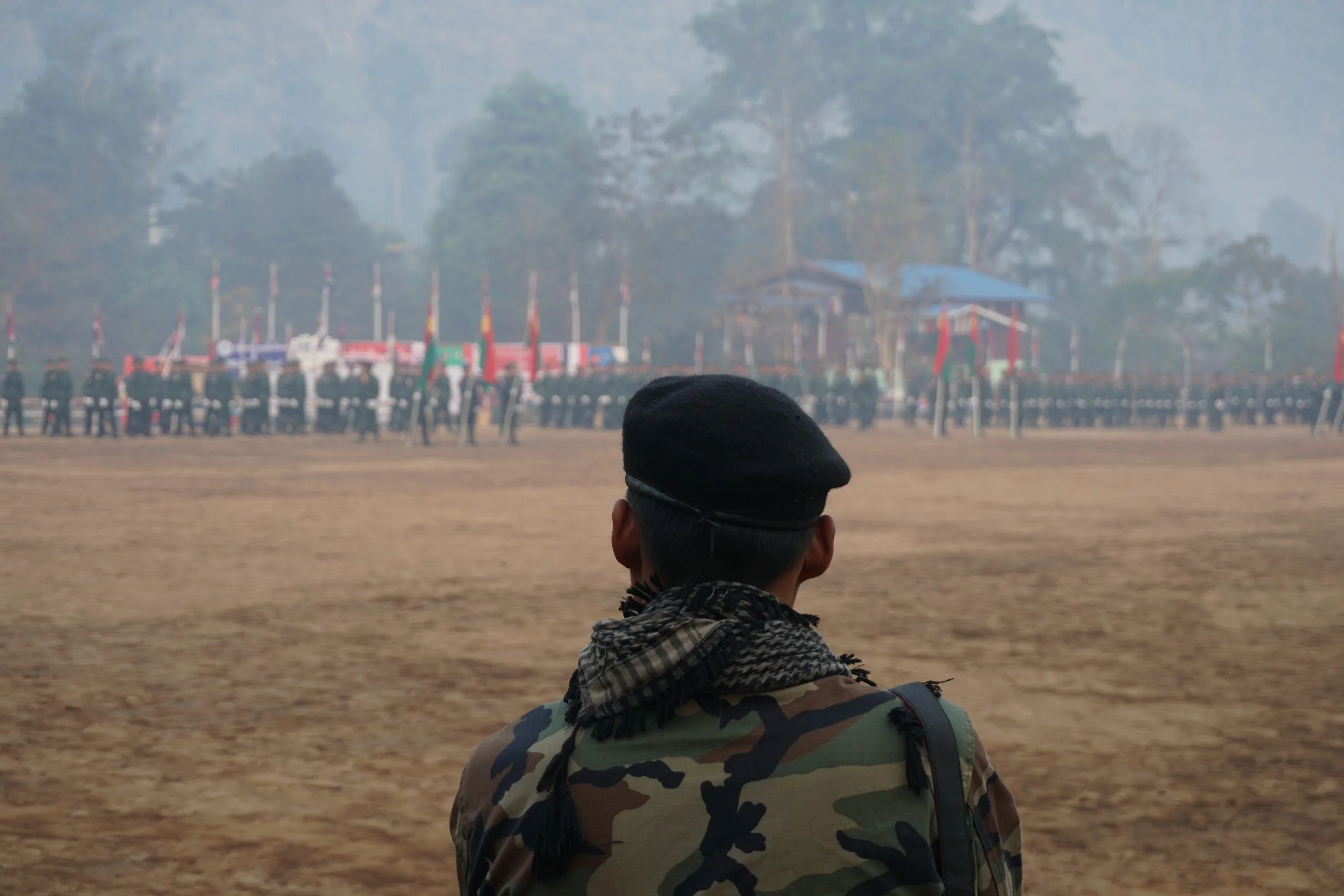
This report examines how Myanmar’s anti-coup resistance movement is being financed, offering a comprehensive analysis of how the People’s Defence Forces (PDFs) sustain themselves economically. Drawing on dozens of interviews with resistance actors, civil society, and international stakeholders, it sheds light on the diverse fundraising methods, ranging from crowdfunding to natural resource taxation, and explores how these practices are reshaping local governance, political legitimacy, and the broader trajectory of Myanmar’s war. The report confronts complex dilemmas around accountability, aid diversion, and international support, offering critical practical and operational insights.

Since Myanmar’s 2021 coup, armed resistance has expanded rapidly, with over 600 People’s Defence Forces (PDFs) emerging across the country. These groups vary widely in structure, capacity, and alliances—some closely integrated with Ethnic Armed Organisations (EAOs), others aligned with the National Unity Government (NUG), and some operating autonomously.
This report introduces a framework to categorise PDFs based on their level of integration and battlefield effectiveness, shedding light on their evolving role in Myanmar’s conflict. It examines shifting alliances, the impact of drone warfare, and the broader trajectory of resistance efforts, offering key insights into the country’s increasingly complex armed opposition.

This paper examines the evolution of the Islamic State Khorasan Province (ISKP) from 2021 through 2024, tracing its transformation from a severely weakened entity to an adaptive, decentralised organisation capable of posing a persistent threat in Afghanistan.
Drawing on over 100 qualitative interviews with ex-ISKP members, supporters and sympathisers, it provides an insider perspective into ISKP’s strategies, challenges and resilience in the face of sustained Taliban counteroperations.
Despite significant losses – including the elimination of key leaders, mass surrenders and the disruption of critical operations – ISKP has maintained visibility and relevance. At the same time, Taliban counterterrorism strategies have evolved. The Taliban’s campaign has suppressed ISKP’s territorial and operational ambitions but has not eradicated its ideological appeal.
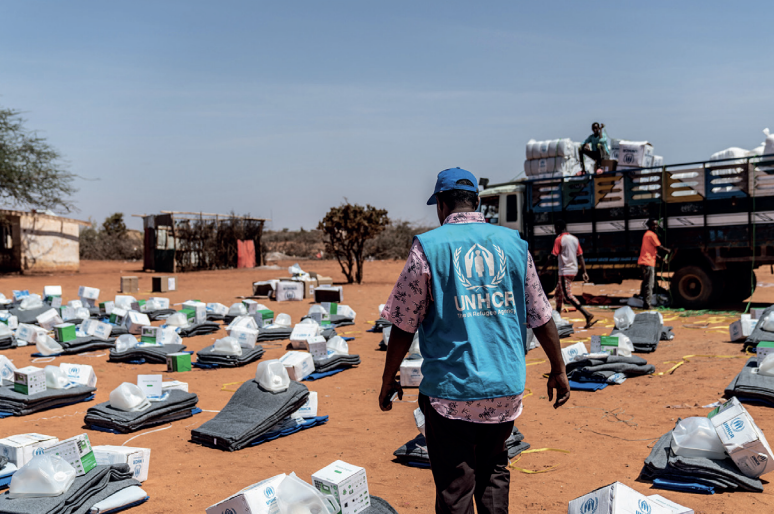
Although the aid sector often treats corruption and diversion as an anomaly, they are pervasive, systemic and often unwittingly perpetuated by standard aid sector practices. Drawing primarily on evidence from Somalia and Afghanistan (with reference to other contexts), this paper explores the specific aid practices that enable and perpetuate corruption and diversion, and what donors and implementers should be doing differently.
The war in Gaza has had deep implications for power dynamics in the Middle East. Iran’s regional power has been particularly impacted with an altering of the so-called ‘Axis of Resistance’, its network of allies across the region—including in Palestine, Lebanon, Iraq, Syria, and Yemen. This has had a considerable impact on Iran’s military capabilities in the current confrontation with Israel. To shed light on these developments, and what they mean for Iran and the balance of power in the region, we spoke with Centre on Armed Groups Fellow, Dr Fatima Moussaoui, a Middle East expert and lecturer at Sciences Po Paris, who explores these dynamics in her recent book, Iran’s Military Power Projection and the Empowerment of Ansar Allah.
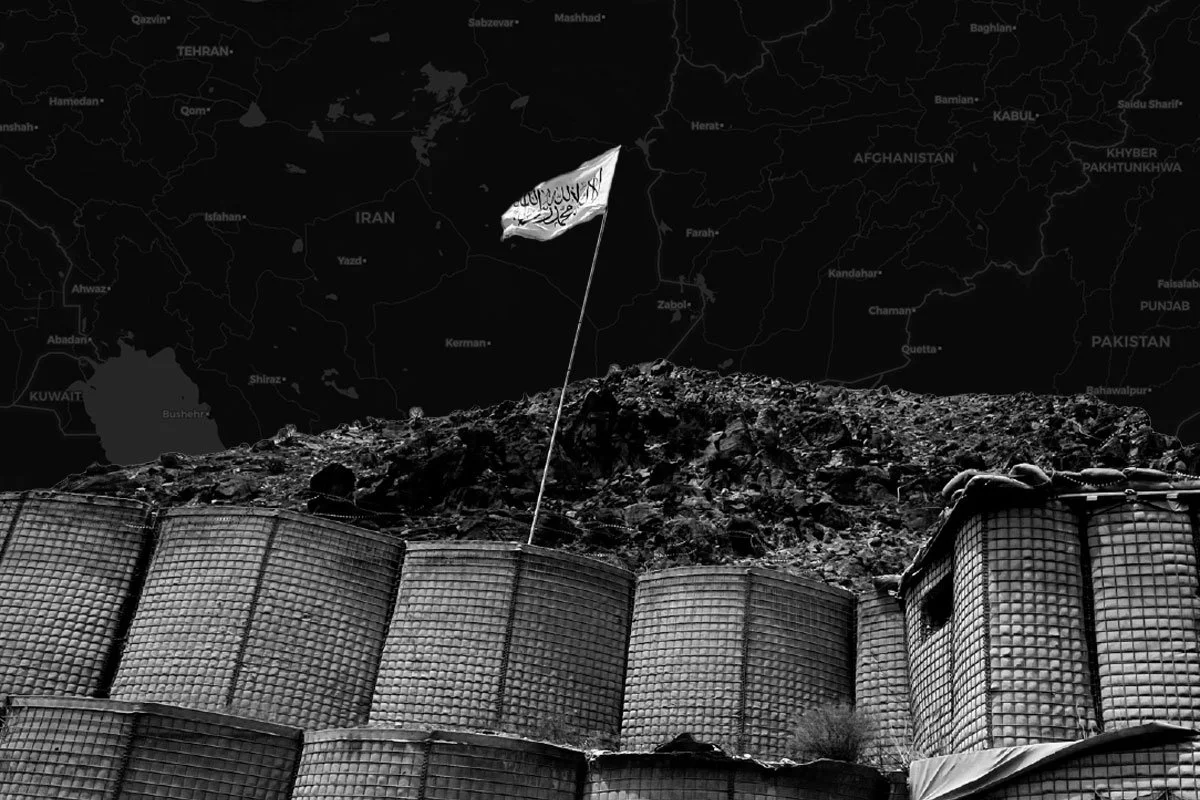
This findings report explores why and how armed groups engage with cultural heritage, offering new tools and insights for cultural protection in conflict zones.
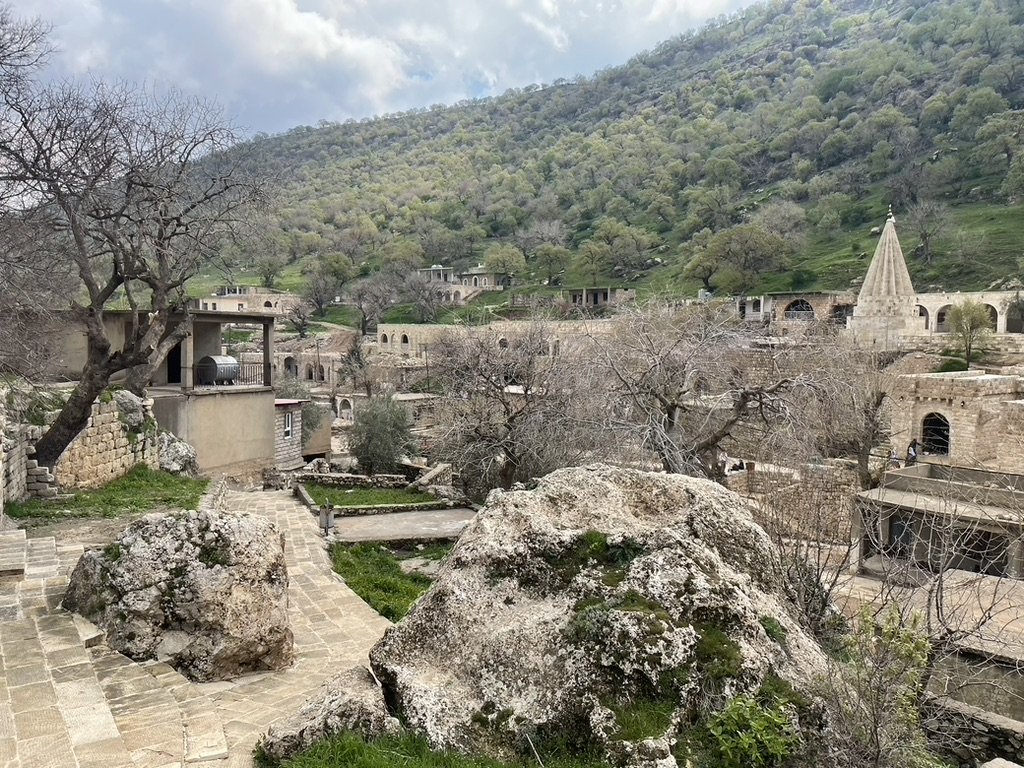
This briefing presents strategies for engaging armed groups on cultural heritage protection, focusing on risk management, community engagement, and practical tools for culturally sensitive programming in conflict zones.
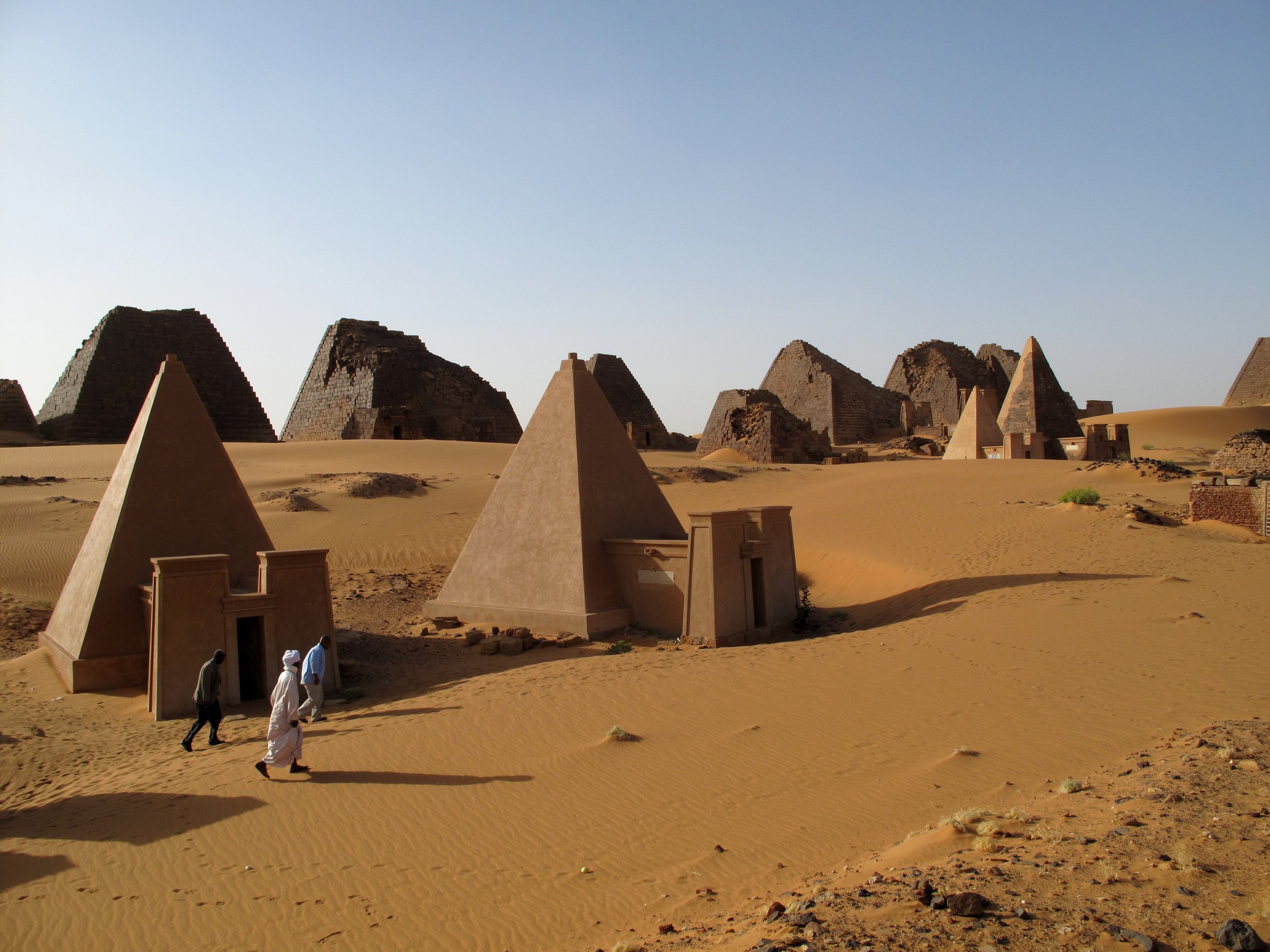
This briefing note explores why armed groups protect or destroy cultural heritage, highlighting ideological, political, and contextual factors that shape their behaviour. It offers insights to inform targeted engagement strategies in conflict zones.

This briefing outlines barriers and solutions to building capacity for engaging armed groups and de facto authorities in protecting cultural heritage. It calls for better tools, partnerships, and recognition of heritage protection as a core humanitarian concern.

This briefing explores how cultural heritage can open dialogue with armed groups and de facto authorities in conflict zones, drawing on case studies from Afghanistan, Mali, Myanmar, Sudan, and Syria. It highlights cultural heritage as a potential tool for peacebuilding and recommends strategies to bridge cultural and political engagement.
This paper examines the evolution of the Islamic State Khorasan Province (ISKP) from 2021 through 2024, tracing its transformation from a severely weakened entity to an adaptive, decentralised organisation capable of posing a persistent threat in Afghanistan.
Drawing on over 100 qualitative interviews with ex-ISKP members, supporters and sympathisers, it provides an insider perspective into ISKP’s strategies, challenges and resilience in the face of sustained Taliban counteroperations.
Despite significant losses – including the elimination of key leaders, mass surrenders and the disruption of critical operations – ISKP has maintained visibility and relevance. At the same time, Taliban counterterrorism strategies have evolved. The Taliban’s campaign has suppressed ISKP’s territorial and operational ambitions but has not eradicated its ideological appeal.

The Islamic State Khorasan Province (ISKP) has proved to be remarkably resilient despite international and Taliban government efforts to destroy it. This paper offers an in-depth analysis of ISKP’s recruitment strategies, the varied experiences of its members, and the group’s operational dynamics across Afghanistan.

Checkpoints and the transit taxes that can be levied at them have been central to the vagaries of Afghan state formation and conflict—and are crucial to understand the rise to power of the Taliban. In this new working paper Sarajuddin Isar posits that checkpoint taxation is a key means of creating and negotiating rents between state and non-state actors, driving political settlements and conflict.
Although the aid sector often treats corruption and diversion as an anomaly, they are pervasive, systemic and often unwittingly perpetuated by standard aid sector practices. Drawing primarily on evidence from Somalia and Afghanistan (with reference to other contexts), this paper explores the specific aid practices that enable and perpetuate corruption and diversion, and what donors and implementers should be doing differently.

This “review of reviews” looks at how and what Western governments and international organisations have tried to learn from the intervention in Afghanistan.

This paper argues that we should not see ‘political’ and ‘criminal’ groups as separate categories. Instead, we should envision a spectrum of motives and practices across all armed groups, regardless of how they are labelled.
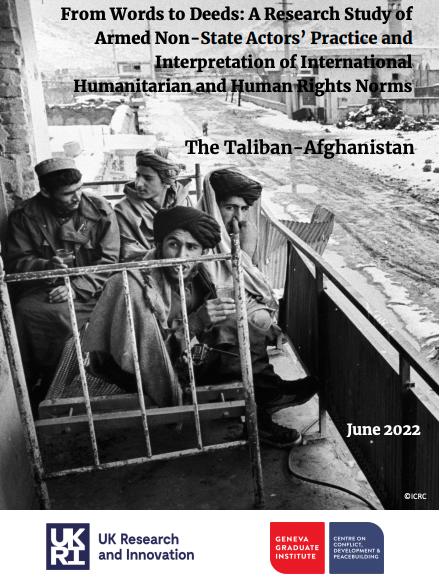
Part of a larger research programme hosted by the Geneva Graduate Institute, this study examines the Taliban insurgency’s practice and attitudes toward IHL rules and human rights norms.

Prevailing understandings of control – which focus on territorial dividing lines and acts of violence – are incomplete. Our paper argues that armed group control should instead be broken down according to how armed groups seek to influence populations.

Much has been written about the Taliban and Al Qaeda since 2001, but there is little consensus. Based on over 100 interviews with insurgent commanders and others, this report examines the Taliban’s strategic calculus for maintaining ties to Al Qaeda.

Western states have frequently worked with non-state armed groups to confront security threats, as part of global counter-terrorism operations or as de facto security providers in stabilisation contexts. But this often presents substantial risks or drawbacks. This joint paper, published with GPPi, considers how the US tried to mitigate these risks while working with militias and substate forces in Afghanistan, Syria and Iraq.

This discussion paper examines how the international order that once contained armed conflict is fracturing across multiple, simultaneous dimensions. Drawing on cases spanning Sudan, Myanmar, Yemen, the Sahel, and Ukraine, the paper argues that these compounding failures have given armed groups and de facto authorities far greater freedom and resources than most analysts anticipated.
The paper identifies four cross-cutting dynamics reshaping this landscape: the breakdown of the classic patron-proxy model into fragmented, multi-patron brokerage networks; the growing economic and infrastructural power of armed groups, who now govern revenue streams, trade routes, and services independent of external backers; the retreat of international norm enforcement in favour of local, informal bargaining; and the weaponisation of misinformation to derail negotiations and access agreements. On this basis, the paper calls for a fundamental shift in how donors and practitioners approach engagement.
This research report explores the perceptions, motives, and practices of non-state armed groups and de facto authorities regarding children’s access to essential services across four case-studies: Mali, Myanmar, the Occupied Palestinian Territory and Yemen.
This briefing note shows Myanmar’s conflict entering a critical phase, where resistance forces face growing pressure but continue to adapt, even as the war becomes a prolonged and uncertain contest of endurance.
From Myanmar to Somalia, armed groups are shaping markets, setting economic rules, and pursuing international economic relations. This report challenges the narrow focus on illicit finance, showing how armed groups around the world regulate trade, allocate resources, and govern everyday economic life—sometimes more effectively than the state. Combining insights into four case studies and a comparative analytical framework, the report offers a new lens for understanding how non-state actors structure economies during conflict. For development economists, peacebuilders, and humanitarians, understanding these systems is essential. Effective aid, realistic economic policy, and meaningful engagement with conflict-affected areas all require a grounded view of how armed groups govern economies in practice.
This report explores how Myanmar’s armed resistance has evolved since the 2021 coup, focusing on eight People’s Defence Forces (PDFs) across the country. These include Autonomous Battalions like the Mandalay PDF and Bamar People’s Liberation Army—powerful, Bamar-led groups that work independently but maintain key alliances. It also examines Integrated Battalions, deeply tied to ethnic armed groups, like the Karenni Nationalities Defence Force (KNDF). In addition, the report covers mid-capacity Allied Battalions like CDF–Mindat, ABSDF, SAF, and PLA, which operate alongside ethnic forces while keeping some autonomy. Finally, it looks at Localised Battalions that may shift closer to allied status if support increases, such as the Southern Shan PDF. This report explores how Myanmar’s armed resistance has evolved since the 2021 coup, focusing on eight People’s Defence Forces (PDFs) across the country. The analysis includes Autonomous Battalions like the Mandalay PDF and Bamar People’s Liberation Army—powerful, Bamar-led groups that work independently but maintain key alliances. It also examines Integrated Battalions, deeply tied to ethnic armed groups, like the Karenni Nationalities Defence Force (KNDF). In addition, the report covers mid-capacity Allied Battalions like CDF–Mindat, ABSDF, SAF, and PLA, which operate alongside ethnic forces while keeping some autonomy. Finally, it looks at Localised Battalions that may shift closer to allied status if support increases, such as the Southern Shan PDF. Together, these case studies offer critical insight into the structure and fragmentation of Myanmar’s resistance—underscoring the need for context-specific engagement strategies rather than one-size-fits-all approaches.
This briefing note shows that the widespread use of drones in Myanmar illustrates a technical and tactical shift for both the military (SAC) and resistance movements, reshaping how each side engages on the battlefield and responds to evolving capabilities. While resistance groups initially had a head start, they are now falling behind on the innovation curve and increasingly depend on low-cost adaptation to overcome resource constraints. The SAC, by contrast, has gained the upper hand through a newly acquired high-tech drone fleet drawing on Russian and Chinese technology. The decentralised and resource-limited nature of resistance drone warfare has spurred tactical innovation but also fragmented command structures, complicating efforts to scale coordinated operations. In addition, the report explores how the rise of drone warfare has opened up new roles for youth and women within resistance movements.
This report examines how Myanmar’s anti-coup resistance movement is being financed, offering a comprehensive analysis of how the People’s Defence Forces (PDFs) sustain themselves economically. Drawing on dozens of interviews with resistance actors, civil society, and international stakeholders, it sheds light on the diverse fundraising methods, ranging from crowdfunding to natural resource taxation, and explores how these practices are reshaping local governance, political legitimacy, and the broader trajectory of Myanmar’s war. The report confronts complex dilemmas around accountability, aid diversion, and international support, offering critical practical and operational insights.
Since Myanmar’s 2021 coup, armed resistance has expanded rapidly, with over 600 People’s Defence Forces (PDFs) emerging across the country. These groups vary widely in structure, capacity, and alliances—some closely integrated with Ethnic Armed Organisations (EAOs), others aligned with the National Unity Government (NUG), and some operating autonomously.
This report introduces a framework to categorise PDFs based on their level of integration and battlefield effectiveness, shedding light on their evolving role in Myanmar’s conflict. It examines shifting alliances, the impact of drone warfare, and the broader trajectory of resistance efforts, offering key insights into the country’s increasingly complex armed opposition.

This Working Paper asks: what are the governance strategies and technologies that armed groups use to project authority? Comparing the use of checkpoints by two armed groups that operate in overlapping areas in Myanmar’s borderlands, Centre-fellow Tony Neil and Saw Day Chit find that armed groups use checkpoints differently to achieve different outcomes that are shaped by underlying ideological and cosmological foundations.

Following Myanmar’s February 2021 coup, checkpoints have exploded, crucial to both the military junta and resistance forces. Based on fieldwork in Sagaing Region and Chin State in 2022-2023, this paper by Gerard McCarthy and Kyle Nyana theorises the relational dynamics at and between their respective checkpoints.

The flow of opium presented unique opportunities and challenges for the Burmese armed groups interested in profiting from its concentrated wealth. In this working paper, John Buchanan explores the emerging features of armed group predation tied to the explosive growth of Shan State’s opium sector from the 1950s to the 1990s.