

Checkpoint Fragments and Hierarchies: Competing regimes of circulation in wartime Yemen, 2015-2026
Yemen’s war is also fought through roads. This paper shows how checkpoints along the Abyan–Aden–Lahej–al-Dhale’a–Dhamar corridor have become tools for extracting money, sorting people and goods, and enforcing rival claims to authority. It contrasts fragmented checkpoint rule in government/STC areas with the more centralised Houthi system, while showing that both make movement costly and politically controlled.

War over Checkpoints: Nine theses on roadblocks and the politics of circulation in conflict-affected borderlands
Drawing on research in Chad, DR Congo, Libya, Myanmar, South Sudan, West Africa and Yemen, this Working Paper challenges narrow readings of roadblocks as security devices or sites of corruption. Instead, it conceptualises them as politically and economically generative nodes through which authority is exercised, rents are extracted and redistributed, markets are shaped, and conflict is financed.

Shifting sands: Iran, the Axis of Resistance, and the war in Gaza
The war in Gaza has had deep implications for power dynamics in the Middle East. Iran’s regional power has been particularly impacted with an altering of the so-called ‘Axis of Resistance’, its network of allies across the region—including in Palestine, Lebanon, Iraq, Syria, and Yemen. This has had a considerable impact on Iran’s military capabilities in the current confrontation with Israel. To shed light on these developments, and what they mean for Iran and the balance of power in the region, we spoke with Centre on Armed Groups Fellow, Dr Fatima Moussaoui, a Middle East expert and lecturer at Sciences Po Paris, who explores these dynamics in her recent book, Iran’s Military Power Projection and the Empowerment of Ansar Allah.
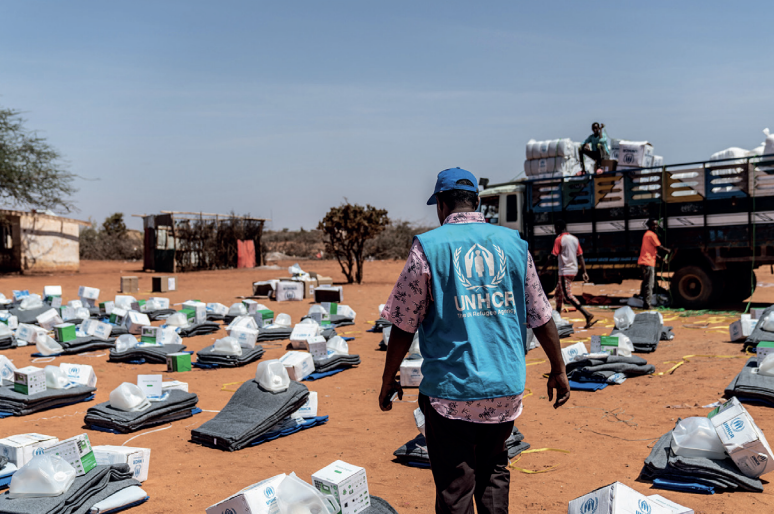
Time for change: the normalization of corruption and diversion in the humanitarian sector
Although the aid sector often treats corruption and diversion as an anomaly, they are pervasive, systemic and often unwittingly perpetuated by standard aid sector practices. Drawing primarily on evidence from Somalia and Afghanistan (with reference to other contexts), this paper explores the specific aid practices that enable and perpetuate corruption and diversion, and what donors and implementers should be doing differently.

Citizens without states: the implications of non-recognition for people in de facto states
This paper examine the impact of non-recognition of de facto authorities on the people living in these territories. Arguing that the negative social, economic and well being impacts are profound, it urges for a re-think approaches to de facto authority.