Social infrastructures of Protection in Somalia
Ashley Jackson & Rahma Abikar
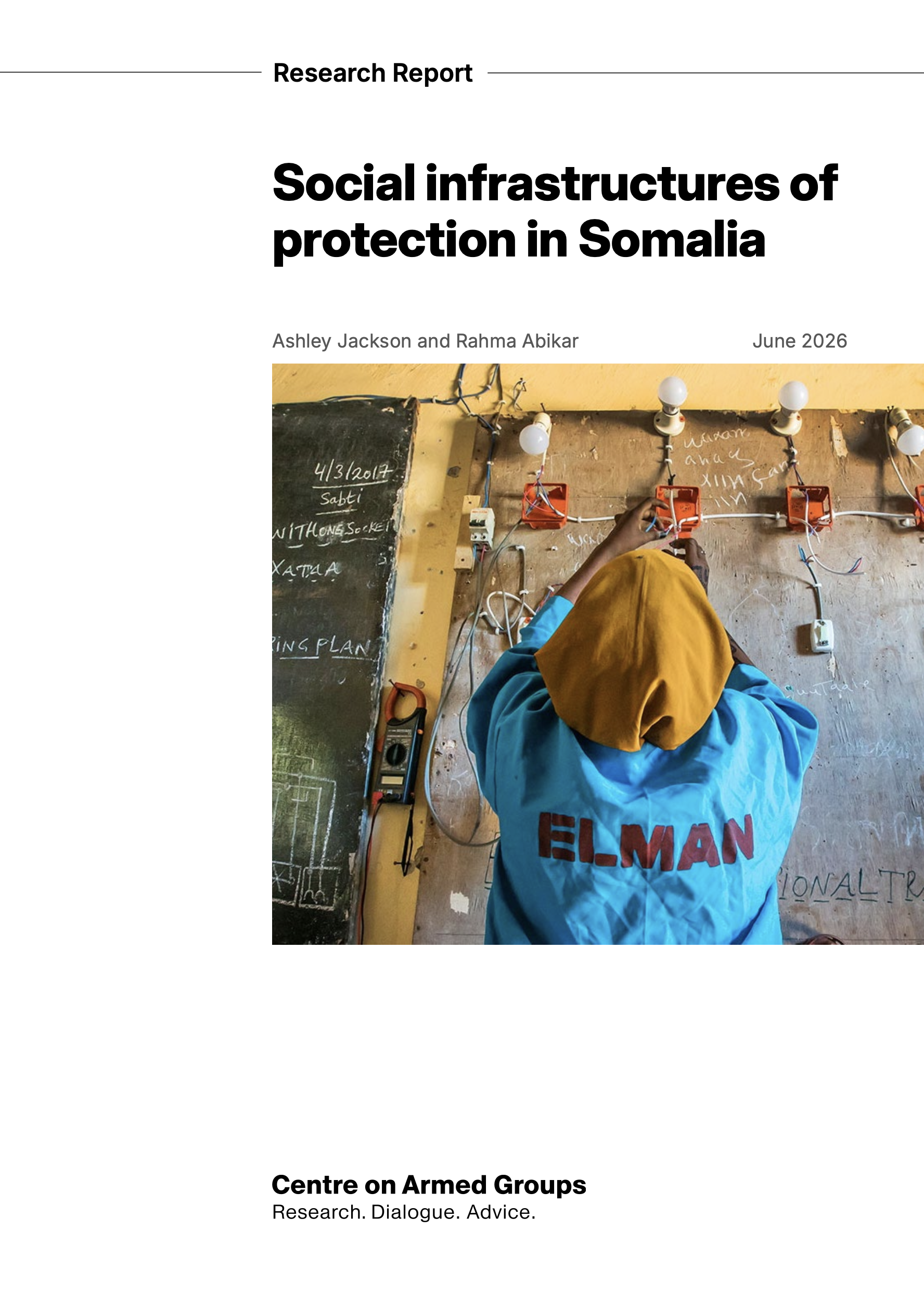
Somali civilians have developed sophisticated systems to protect themselves, through forms of authority and social organisation that formal institutions overlook. This paper examines those systems through two case studies of interventions led by Elman Peace: a community-based reintegration model for young people formerly associated with, or at risk of recruitment by, Al-Shabaab; and an intergenerational dialogue model to reduce female genital mutilation. Both build collective protection arrangements rooted in trust, reputation, moral responsibility and long-term accompaniment.
The paper argues that effective civilian protection depends on these social infrastructures of protection: networks of legitimacy, obligation and reciprocity that local organisations can activate and stabilise over time. It shows how Somali peacebuilding organisations act as institutional innovators, developing methods that international protection and peacebuilding frameworks have often failed to recognise or support.