

Drone warfare and technological change in Myanmar
This briefing note shows that the widespread use of drones in Myanmar illustrates a technical and tactical shift for both the military (SAC) and resistance movements, reshaping how each side engages on the battlefield and responds to evolving capabilities. While resistance groups initially had a head start, they are now falling behind on the innovation curve and increasingly depend on low-cost adaptation to overcome resource constraints. The SAC, by contrast, has gained the upper hand through a newly acquired high-tech drone fleet drawing on Russian and Chinese technology. The decentralised and resource-limited nature of resistance drone warfare has spurred tactical innovation but also fragmented command structures, complicating efforts to scale coordinated operations. In addition, the report explores how the rise of drone warfare has opened up new roles for youth and women within resistance movements.

Shifting sands: Iran, the Axis of Resistance, and the war in Gaza
The war in Gaza has had deep implications for power dynamics in the Middle East. Iran’s regional power has been particularly impacted with an altering of the so-called ‘Axis of Resistance’, its network of allies across the region—including in Palestine, Lebanon, Iraq, Syria, and Yemen. This has had a considerable impact on Iran’s military capabilities in the current confrontation with Israel. To shed light on these developments, and what they mean for Iran and the balance of power in the region, we spoke with Centre on Armed Groups Fellow, Dr Fatima Moussaoui, a Middle East expert and lecturer at Sciences Po Paris, who explores these dynamics in her recent book, Iran’s Military Power Projection and the Empowerment of Ansar Allah.

Environmental frontlines
Environmental violence in Mexico is escalating, claiming the lives of dozens of land defenders each year — yet the crisis remains dangerously underreported. To understand the roots of this hidden war, we spoke with award-winning journalist, author, and Centre on Armed Groups Fellow, Dr. Anjan Sundaram, whose frontline reporting has spanned war zones from Central Africa to Latin America. Anjan unpacks the nexus between environmental conflict, organised crime, and international business interests — and explains why indigenous communities are increasingly taking up arms to protect ecosystems vital to our planet’s future.

Urbicide in Khartoum: An Analysis of the Al-Amarat and Mayo Neighbourhoods, 2023–24
This report investigates how the war in Sudan is transforming Khartoum through acts of urbicide, the deliberate destruction of urban environments. It draws on satellite imagery, eyewitness testimony, and analysis of conflict dynamics to show how the deliberate tactics of the Rapid Support Forces and the Sudanese Armed Forces have reshaped the capital’s geography. The paper highlights explores how spatial control, infrastructure destruction, looting, and the targeting of symbolic and civilian spaces have become key tactics of the war.
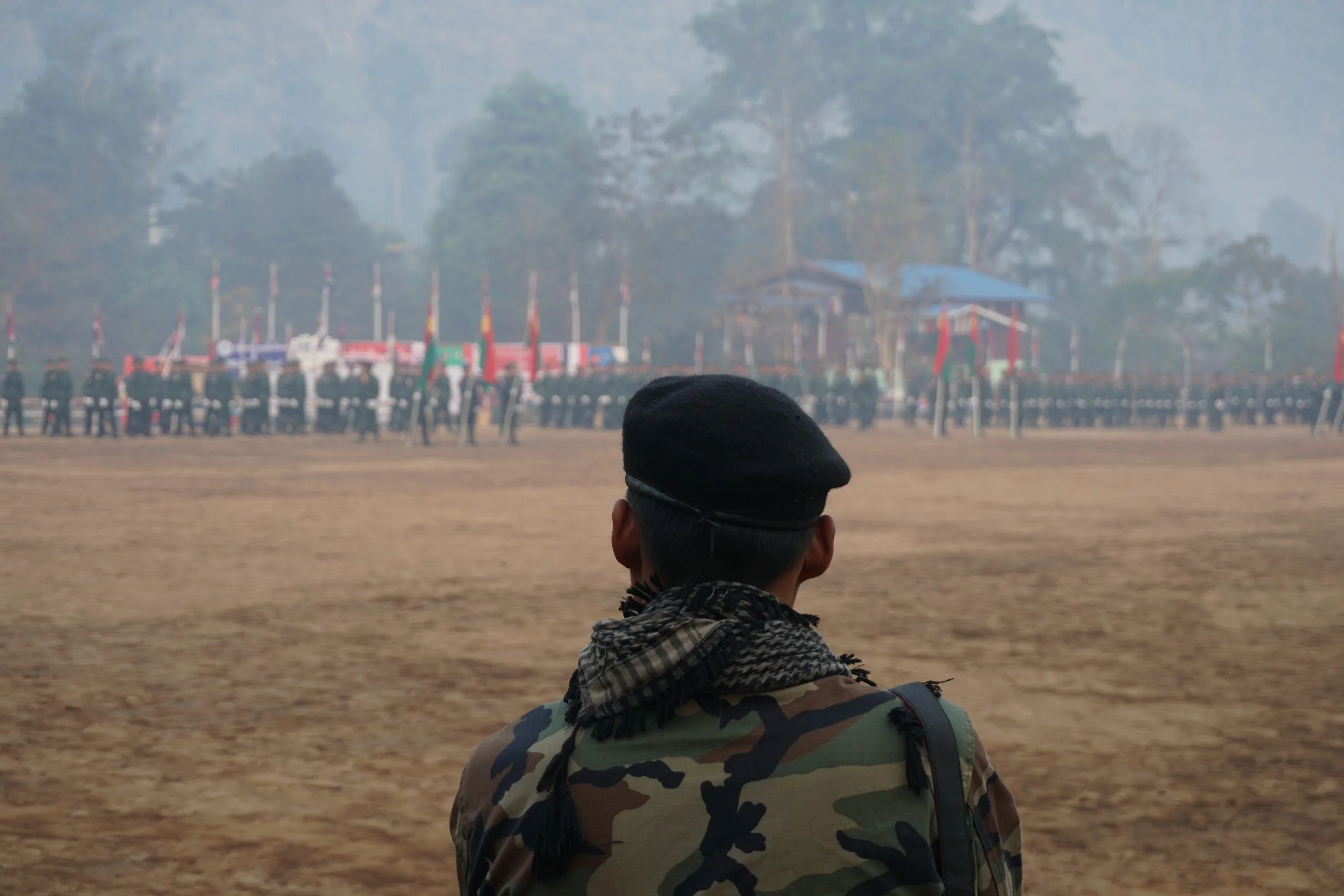
Funding the People's Defence Forces in Myanmar
This report examines how Myanmar’s anti-coup resistance movement is being financed, offering a comprehensive analysis of how the People’s Defence Forces (PDFs) sustain themselves economically. Drawing on dozens of interviews with resistance actors, civil society, and international stakeholders, it sheds light on the diverse fundraising methods, ranging from crowdfunding to natural resource taxation, and explores how these practices are reshaping local governance, political legitimacy, and the broader trajectory of Myanmar’s war. The report confronts complex dilemmas around accountability, aid diversion, and international support, offering critical practical and operational insights.

The M23 crisis
M23’s offensive and capture of Goma have dominated recent coverage of the crisis in the eastern DRC. To unpack what’s happening on the ground — and what it means for the wider region — we spoke with Centre on Armed Groups Fellow Christoph Vogel, an academic, investigator, and writer who has spent more than 15 years researching armed conflict in the DRC. Christoph discusses M23’s end game, the regional power dynamics fueling the conflict, and what we might expect in the weeks and months ahead.
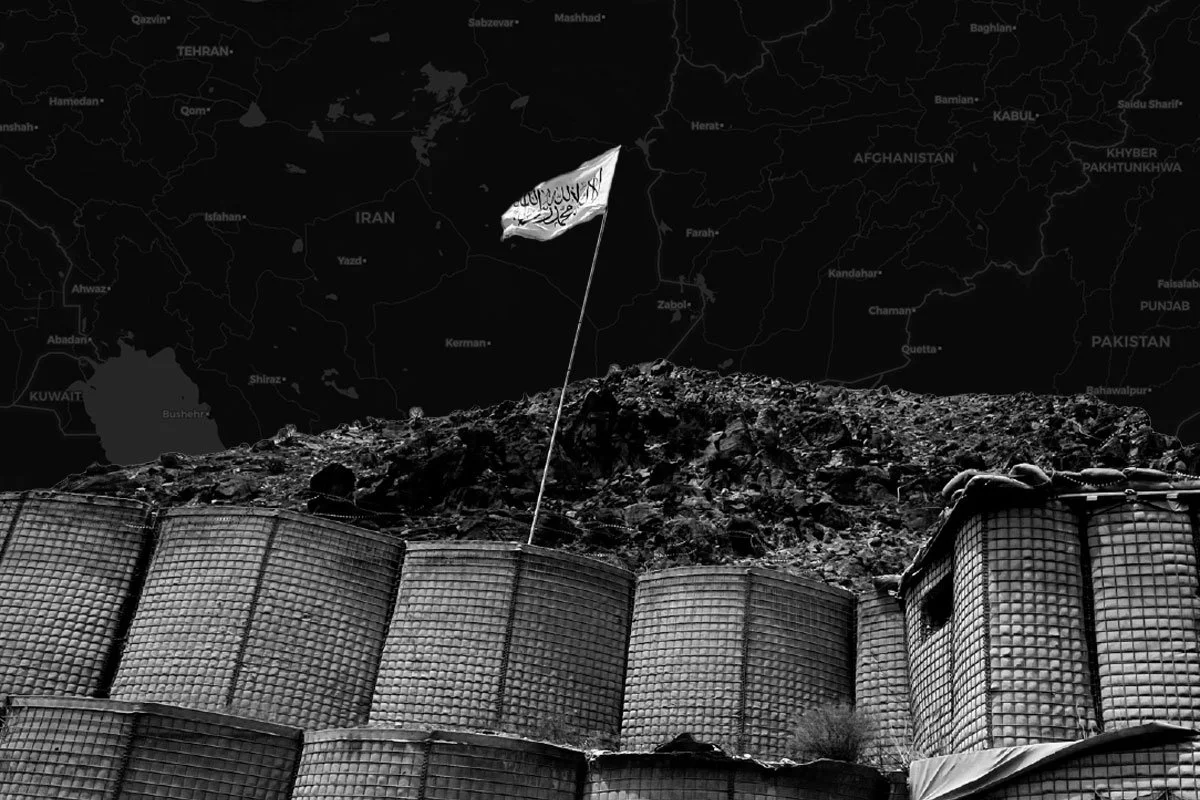
Unlikely Allies: Engaging armed groups for the protection of cultural heritage
This findings report explores why and how armed groups engage with cultural heritage, offering new tools and insights for cultural protection in conflict zones.

Engaging de facto authorities & armed groups on cultural heritage protection in Syria
This Syria case study explores how engaging de facto authorities on cultural heritage protection can support peacebuilding and reconciliation. It examines HTS’s evolving approach to heritage and offers practical engagement strategies.
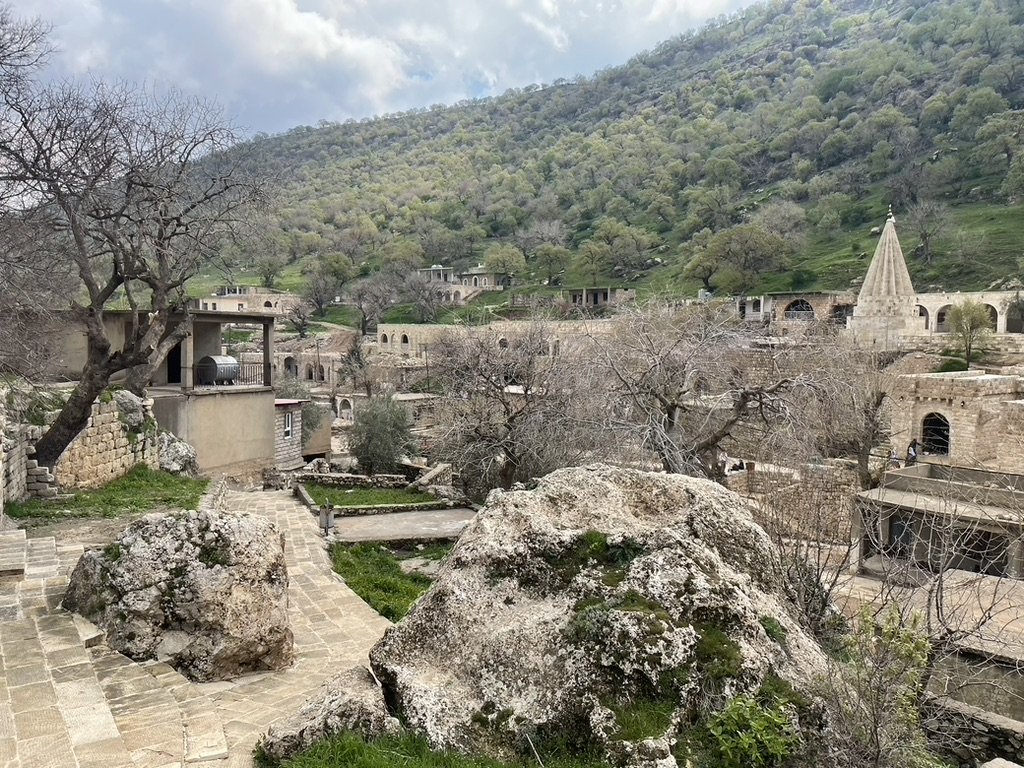
Strategies for engaging armed groups in cultural heritage protection
This briefing presents strategies for engaging armed groups on cultural heritage protection, focusing on risk management, community engagement, and practical tools for culturally sensitive programming in conflict zones.

Motivations of armed groups to protect cultural heritage
This briefing note explores why armed groups protect or destroy cultural heritage, highlighting ideological, political, and contextual factors that shape their behaviour. It offers insights to inform targeted engagement strategies in conflict zones.